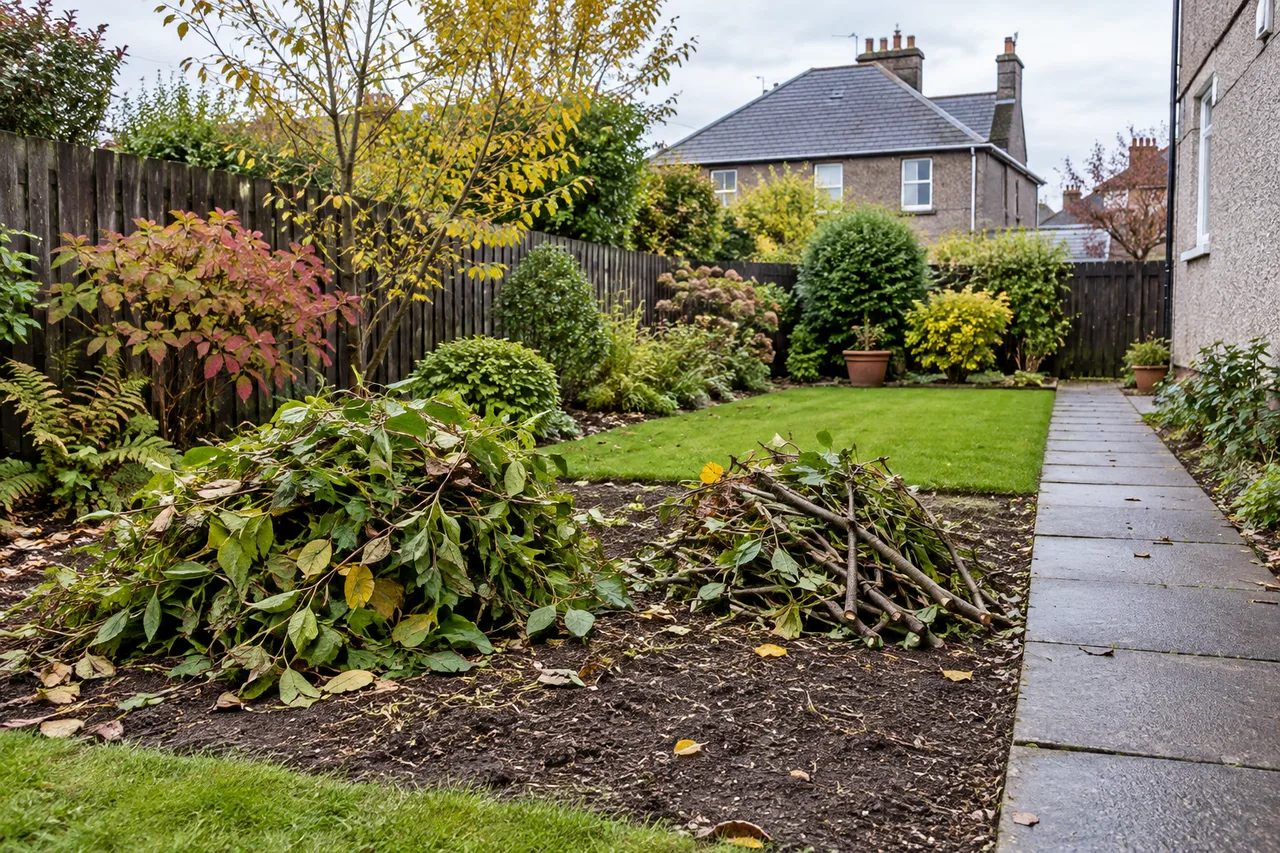
Sort garden waste into three groups
“Garden waste” can mean a few hedge cuttings or a whole patio coming up. Those are very different loads. Walk round the job and list what will actually leave the garden, including anything tucked behind the shed.
- Green cuttings: grass, leaves, hedge trimmings and branches. Note thick branches or a stump separately.
- Earth and masonry: soil, turf, stones, broken paving, bricks and concrete. These add weight much faster than loose cuttings.
- Other garden items: old fencing, plant pots, plastic trays, garden furniture and shed contents. They are not the same as green waste.
Keep the groups separate while you agree the collection. A mixed load may need a different arrangement from one containing only an agreed material. Our skip hire and waste guidance explains the service and the items to discuss before booking. Tell us the whole list rather than assuming everything found outdoors can go into the same skip.
Soil, turf and roots need a separate discussion
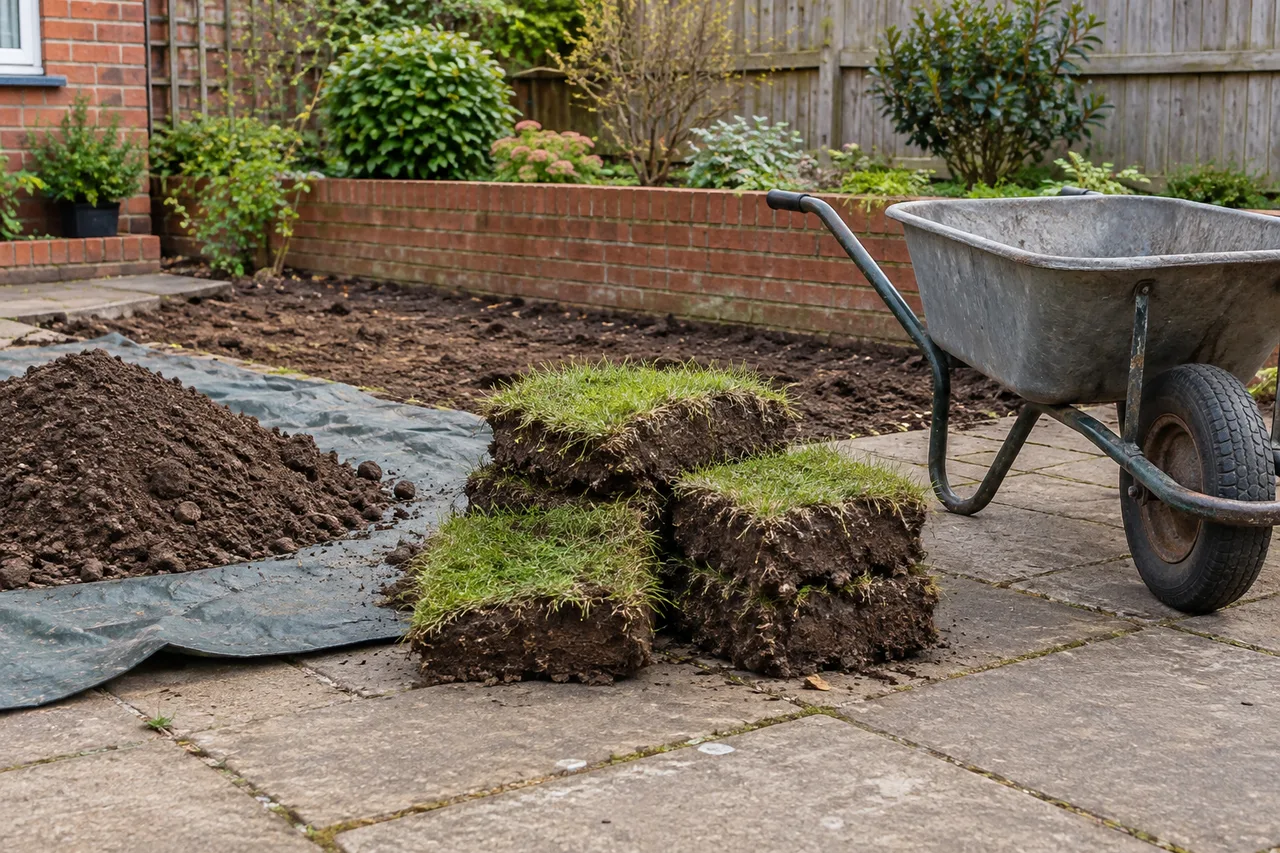
A lifted strip of turf includes grass, roots and the soil underneath. A shrub root ball can also bring a surprising amount of earth with it. Describe these as turf or roots with soil attached, rather than simply adding them to the branch pile.
The amount of heavy material allowed must be agreed before delivery. Extra empty space above a load does not mean you can keep adding soil or rubble. Choosing a larger skip does not automatically increase the permitted weight, and a tall skip intended for light, bulky waste may not suit soil.
Say whether you are lifting a few slabs, removing a concrete base or digging out a bed. If the earth contains unknown buried waste, smells of fuel or may be contaminated, stop and describe the problem before arranging disposal. Do not mix it into ordinary garden waste. We cannot promise acceptance or specialist handling from a general description of a garden clear-out.
Estimate the whole job before you start digging
For cuttings, note the length, width and height of the loose pile, plus the longest branches. Explain whether they are fine hedge trimmings or thick, awkward pieces. A loosely spread pile contains gaps, so its outside measurements are a starting point for a conversation, not an exact skip requirement.
For soil, measure the area you intend to dig and the average depth. For example, a bed measuring 3 metres by 2 metres, dug 10 centimetres deep, contains about 0.6 cubic metres of soil in the ground. That is a volume calculation, not a weight allowance. Once dug, the loose material can take up more space; roots and stones also change the load.
Include the later stages too. Replacing a fence after clearing shrubs adds old posts and panels. Removing a patio may uncover a base you had not counted. If you are weighing up smaller containers, our 4-yard or 8-yard skip guide explains the difference between room for bulky waste and an agreed heavy load.
When the council garden service may be enough
You may not need a skip for routine pruning. South Lanarkshire Council says its burgundy bin can take grass cuttings, leaves, flowers, small branches and hedge trimmings when you have a valid garden waste permit. Tree trunks, thick branches and large hedge cuttings should not go in that bin. Read the council’s current garden waste guidance before filling it.
The council’s separate bulky garden uplift has different rules. Its published exclusions include soil, rubble, grass cuttings and bagged garden waste. Check the garden uplift terms for the items you have so you choose the right service.
A larger clearance involving cuttings, dismantled garden items and building materials needs its own waste plan. Council acceptance rules do not describe what a privately hired skip can take. Equally, arranging a skip does not remove the need to agree each material first. Keep anything you plan to compost or reuse out of the disposal estimate only once you have a practical place for it.
Keep shed contents apart from cuttings
A shed clear-out often adds items that were not in the original garden plan. Empty plastic pots, broken tools, old timber and unwanted furniture need to be listed separately. Describe painted or treated wood and any roofing material rather than calling the whole pile branches.
Do not put liquid paint, pesticides, fuel, batteries, gas cylinders or electrical equipment in a general waste skip. Leave chemicals in their original containers where possible, keep them secure and arrange suitable disposal advice. Do not empty liquids onto soil or into drains to get rid of the container.
Old shed roof sheets deserve particular care if you do not know what they contain. Do not break or cut them to make them fit; get advice before disturbing them. When a clear-out reveals an unexpected item, a phone call before loading is more useful than hiding it underneath the green waste. Separate arrangements and charges may apply. Tell us what you have so we can explain whether we can take it.
Keep a clear route from the garden to the skip
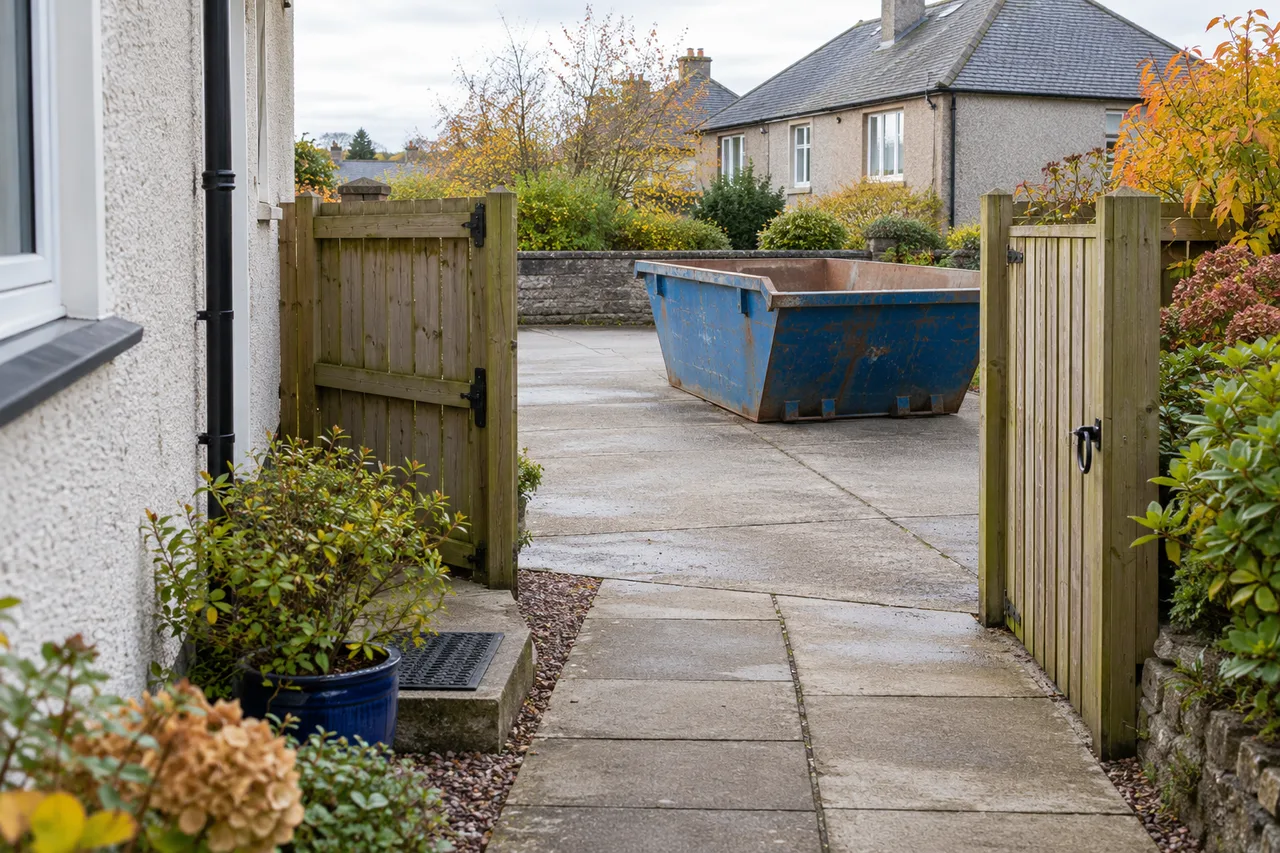
Think about the carrying route before piling waste beside the back door. Open the gate fully and look for steps, loose slabs, narrow turns and places where a wheelbarrow would catch. Keep shared paths, bin access and neighbours’ entrances clear throughout the job.
A wheelbarrow can reduce carrying when the ground and route suit it, but a heavily filled barrow is still difficult to control. Use manageable loads, especially on a slope, and do not balance it on makeshift boards over steps. Wet leaves and spilled soil can make a paved route slippery, so clear spills as you go.
The skip itself needs an agreed position on suitable firm, level ground, with room for the delivery lorry. The garden path being wide enough for you does not prove that the lorry can reach the driveway. Mention gates, parked cars, overhead cables and tight turns. Our Hamilton skip placement guide covers the fuller checks, including permission when public-road space is needed.
Agree the load, then keep it within the limits
Keep branches and other waste inside the sides and below the skip’s fill line. Do not stand in the skip to stamp cuttings down, extend the sides with boards or leave long pieces sticking out. Only shorten or dismantle items when you have the right equipment and can do so safely.
Use smaller manageable loads instead of wrestling a heavy slab or root ball into place. The HSE’s handling guidance explains that weight is only part of the risk. Awkward shape, the route and the movement matter too. If loading the skip yourself is unsuitable, discuss the separately agreed lifting and loading offered through rubbish removal.
When you call, have your postcode, waste list, rough quantities, access details and preferred dates ready. Agree permitted materials, loading limits, hire time, collection and what the quote includes. Call again if the job changes before adding more heavy waste.
The Scottish Government’s householder guidance says to check that a private waste transporter’s SEPA registration is valid and ask where the waste will go. Keep your agreed collection details so you know who is taking it and what has been arranged.