What do four and eight yards mean?
The number describes volume: the space inside the skip. Four cubic yards is about 3.1 cubic metres, while eight cubic yards is about 6.1 cubic metres. An 8-yard skip therefore has twice the volume of a 4-yard skip. That does not mean it takes twice the weight, or that every pile will pack neatly into that space.
Loose packaging settles differently from a wardrobe. Furniture legs, shelves and curved objects can leave gaps around them. A pile spread across a garage floor may also look much bigger than it will once suitable items are taken apart.
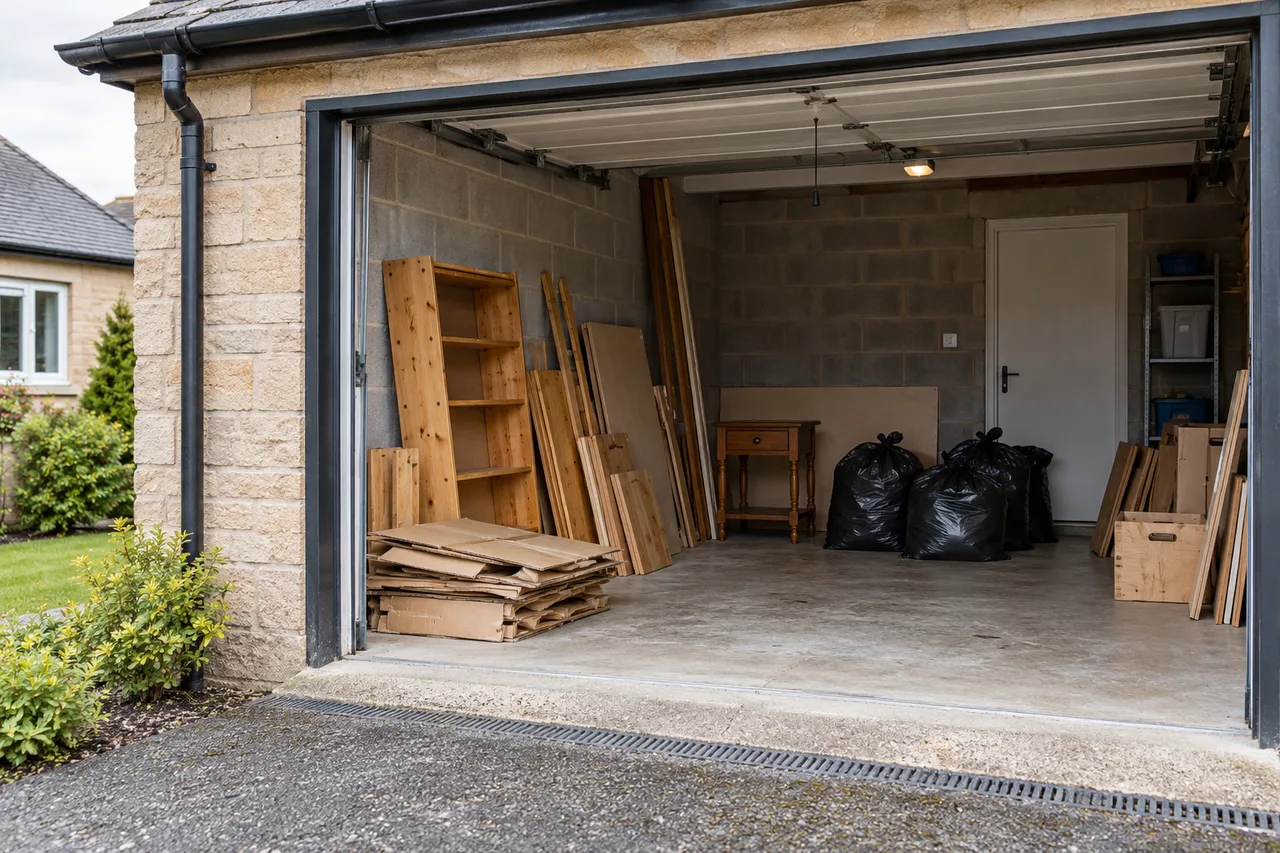
Use our 4-yard and 8-yard skip size guide to compare the approximate measurements. Skip shapes and exact dimensions vary, so confirm the exact skip and delivery access before booking. Treat photographs as help with scale, rather than proof that a particular item will fit.
When a 4-yard skip can suit the job

A 4-yard skip is worth discussing for a limited clear-out: unwanted bits from one room, part of a shed, or a small amount of old shelving and household clutter. It can be a useful choice when you have already separated things to keep, sell or give away.
For example, a small wooden cabinet taken apart, flattened boxes and a few bags of ordinary clutter may form a fairly compact load. Add several complete cupboards or long pieces of furniture and the same job becomes much harder to judge. Describe those pieces separately when you call.
Do not choose the smaller size simply because it leaves more room on the drive. You still need space for delivery, and an undersized skip can leave waste waiting outside. Make the choice from the sorted load and the available access together.
When the extra room in an 8-yard skip helps

An 8-yard skip can be the more useful option when several rooms are being cleared or when the load contains awkward, bulky pieces. More space can make a difference with dismantled furniture, old doors and other agreed materials that do not pack closely together.
Think about the whole job, rather than the first pile by the door. Are you also emptying the loft, taking down garden storage or replacing fitted cupboards? Include those items in the description before choosing. A later decision to clear another room can change the amount substantially.
The larger skip is still not a promise that an entire house clearance will fit. A heavily furnished property may need another arrangement. Equally, a small clear-out does not automatically need the larger option. Give us the rough number and dimensions of the biggest items so the recommendation matches your job.
Sort the load before deciding
You will get a clearer estimate by making a short inventory before the call. Walk through each space once and separate things you are keeping from things that need to leave. If an item is suitable for reuse, arrange its new home before counting it out of the waste load; an unconfirmed collection can fall through.
- List the bulky pieces. Note cabinets, tables, doors and shelving, including anything you cannot safely take apart.
- Describe the smaller waste. Say whether you have loose timber, cardboard or bags of ordinary household clutter.
- Keep special items separate. Mention mattresses, sofas, armchairs, plasterboard, tyres and electrical equipment before booking. They may need separate handling and charges.
Chemicals, liquid paint, batteries and gas cylinders do not belong in a general waste skip. Do not hide uncertain items inside bags. Our waste guidance explains what to discuss, and you should check your waste list with us before you book.
Heavy waste changes the choice
A house clear-out sometimes grows into a DIY job. Once you add broken tiles, bricks, concrete or soil, you are dealing with weight as well as space. A skip can reach its agreed load limit while there is still room above the waste.
A bigger skip gives you more space. It does not automatically let you load more weight. Tell us if any of those heavy materials are involved, even if they are only part of the clear-out. The suitable size and amount you can load must be agreed before delivery.
Keep heavy waste identifiable rather than mixing it through bags of light clutter. If you change the job after booking, call before adding the new material. This is more useful than trying to judge an acceptable weight from how full the skip looks.
Clearing outdoors as well? Our garden clearance guide for cuttings, soil and rubble explains how to separate the materials and estimate a mixed garden load.
Check where the skip and lorry will go
Choosing a size is also an access decision. Measure the entrance, describe any slope and say whether the skip would stand on a driveway, in a yard or on the road. The delivery lorry needs more room than the container's footprint. Mention low branches, overhead cables, parked cars and tight turns.
For a flat or terraced home, think through the route from the waste to the skip. Shared paths, gates and bin access need to stay usable. A smaller container is not helpful if getting waste to it means blocking a neighbour's entrance.
If the skip needs public-road space in Hamilton, permission must be arranged first. South Lanarkshire Council's permit table currently lists 14 days' notice for a builders skip. Confirm the application, parking restrictions and dates for your address; this is not a promise of approval. See our skip placement guide for the fuller access checks.
Load safely and make the booking clear
Keep waste inside the sides and below the fill line. Do not use extra boards to build up the sides, climb into the skip or throw awkward items over the rim. Take apart suitable furniture only when you can do it safely, keeping screws and sharp edges under control.
Do not try to carry something that is too awkward for you to handle safely. Reduce the load or get suitable help, and keep the carrying route clear. The HSE's handling guidance explains why weight is only one part of lifting risk; there is no single safe lifting weight for every situation.
When you call, have your postcode, largest items, waste types, planned position and preferred hire dates ready. Ask what the quote covers and agree collection and any extra charges. If loading a skip yourself does not suit the job, discuss our separate rubbish collection service, where lifting and loading are agreed around the items and access.
Before handing over waste, follow the Scottish Government's householder guidance: confirm the waste transporter's registration on the SEPA public register and ask where the waste will go. Keep your booking details so you know who is taking it away.